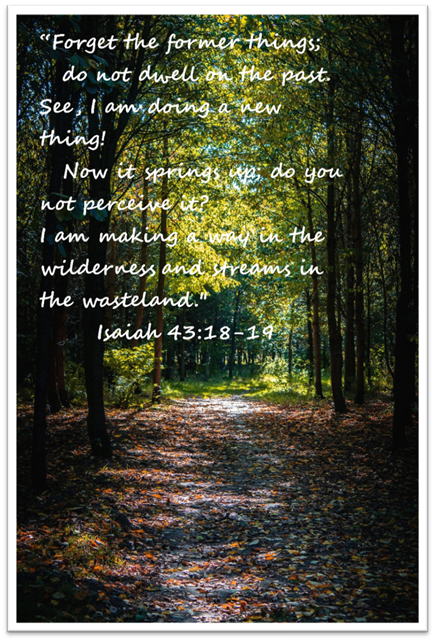
Conscious Detachment
Transformation requires change. It begins with movement away from something or towards something. While in motion, you have choices about what you are taking with you. You may not have thought this through, I know I didn’t. People who are escaping some type of abuse may have the mindset of leaving everything behind. While someone navigating grief, may have the mindset of clinging to everything. And then there is everything in between. Small choices to change a habit, larger decisions about unhealthy relationships and so on. Regardless of where you may be on your transformation journey, you may be struggling with the concept of letting go.
Why does this matter? Because the emotional attachment to something from your past may be negatively affecting your growth. This may slow your progress without your awareness.
Several years ago, I became intrigued by the minimalist movement. I started following the teachings of John Becker “The More of Less” and Rose Lounsbury “The Less Method” and Marie Kondo “Does it Bring Me Joy?”. While all their methods did promise life transformation, I was looking for a means to support the life transformation that I had already begun – and for a different reason than a cluttered life.
In a post by Sustainability Directory from May 4, 2025, the correlation between emotional attachment to objects and how it affects minimalism is considered significant. Even if you are not aspiring to achieve minimalism, if you are aspiring to “let go” of things that no longer serve a purpose in your life, you could benefit from understanding your emotional attachment to the things so that you can let them go.
“Moving beyond the basic understanding of minimalism as decluttering, it becomes apparent that emotional attachment plays a far more intricate role than simply making it harder to let go of things. Attachment theory, initially developed by John Bowlby and Mary Ainsworth in the context of parent-child relationships, offers a compelling framework for understanding these dynamics in adulthood, including our relationships with objects. This theory suggests that early childhood experiences shape our attachment styles, influencing how we form bonds and manage emotional connections throughout life.
These styles can significantly impact our approach to minimalism.”
Sustainability Directory 05.04.25
My “stuff” wasn’t consuming my time in terms of cleaning or organizing, and it wasn’t overwhelming as clutter can sometimes be. My stuff was holding a sacred place where it no longer belonged. Somewhere along the way I had made a choice to save the item and now the item no longer served me.
Key Truths
Five years after my brother passed away, I realized that I was irrationally attached to something he had made for me. I hadn’t been able to use it or even look at it for years because it was in our basement storage area. It had lost its purpose, yet in a state of anxiety about it (of what I’m not sure), I felt almost physically ill at the thought of letting it go. Clearly this wasn’t healthy.
The item was a platform bed with drawers that my brother had built for me when I had no bed after my divorce. It solved both my lack of bed and lack of dresser problem. Years later when I no longer needed the bed, and I was too upset at the thought of getting rid of it, my husband agreed to cutting it in half to create a bench and storing it in the basement (where literally no one used it, ever!). My husband was aware that I wasn’t emotionally ready to let go of it yet. This went on for years. Eventually, we became empty nesters and decided to downsize our house. Where would the bench go now? I still found it hard to release.
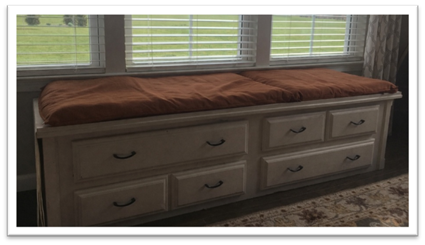
The bench symbolized my independence and strength. It symbolized a moment in my life when I felt brave and courageous. It also represented the compassion my brother showed me in my time of need as he had done on so many occasions. It somehow reminded me of his loving presence. I realized that the bed was a snapshot in time of all these emotions and that I could take a literal snapshot of the bed (now a bench), journal my feelings, and let the bench go. I wanted to honor who I was at that moment in time and remember the gift of support my brother gave me, but holding onto the bed was no longer necessary.
I began photo-release journaling. I started with the bed. I took a picture of the bed, journaled about all my emotions surrounding it, then I let it go.
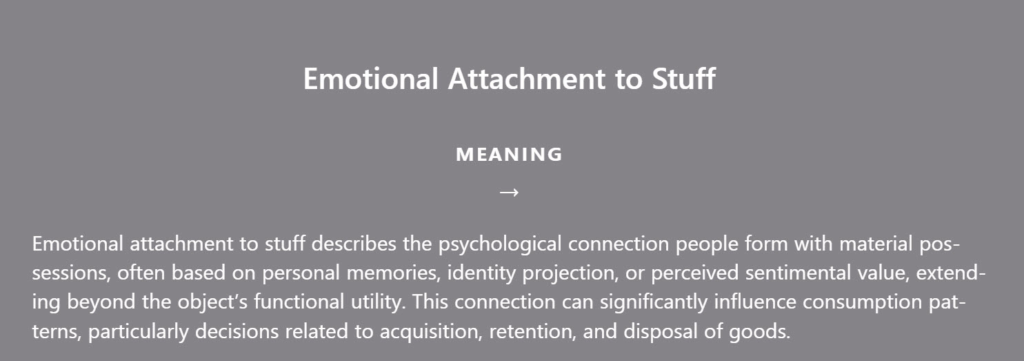
Figure 1. Sustainability Directory Glossary
Another view of attachment is described in the ancient Chinese wisdom of the Tao. This teaching is often described as the “Way” and provides insight to the concept of attachment as a barrier on our journey of life.
In his article on The Art of Letting Go: Exploring Taoism’s Wisdom, Spencer Lanoue writes:
“In the Taoist philosophy, attachment is often compared to trying to hold onto a handful of sand. The tighter we grip, the more the sand slips through our fingers. Similarly, when we cling to attachments, we find ourselves in a constant struggle, trying to control and manipulate the uncontrollable.
In Taoism, attachment is seen as a source of suffering. The desire to possess and cling to things, relationships, or outcomes creates unnecessary resistance and disrupts the natural flow of life. Taoists advocate for letting go of attachments and embracing the principle of non-attachment, allowing life to unfold organically.”
Call to Action
For your transformation journey, find a method of letting go that works for you. Try it in bite size portions at first. If you are holding onto, or even hoarding things due to an anxiety attachment style, don’t start throwing things away in reckless abandon – this could lead to regret and there is no room for regret on your journey. After releasing one item, see how you feel. Process your emotions afterwards. Perhaps you will feel a bit lighter, freer.
I use a journaling app called Day One to support my photo-release method of letting go. Having it on my phone allows me to quickly upload a picture of the item and then add my thoughts before releasing the item from my possession. There are many other apps that you can explore if you are interested in digitally processing your emotions around letting go.
You can also print pictures and attach them to a paper journal if you prefer. Both methods allow you to still visually see the item without the need to retain it in your possession.
Be patient with yourself through this journey of letting go. Honor this step of your transformation.